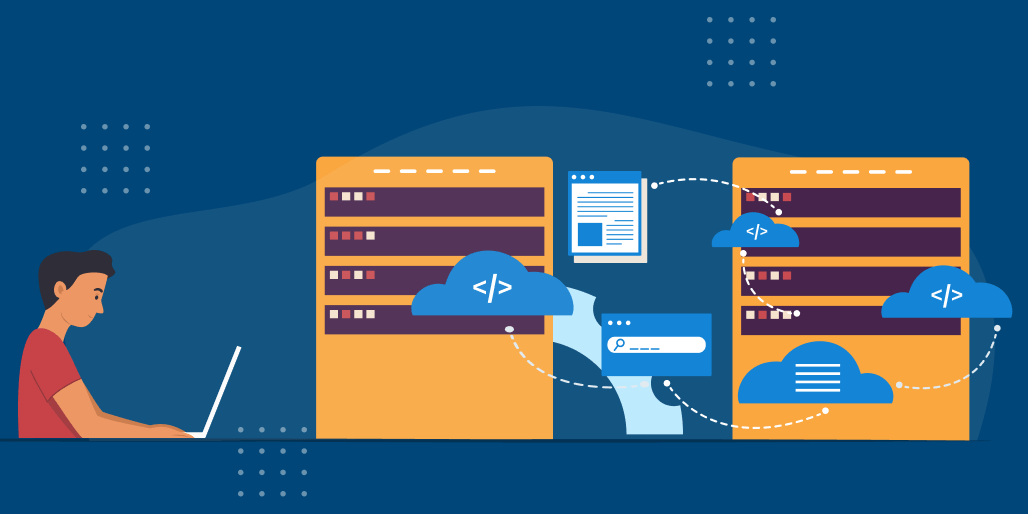
According to McKinsey, the adoption of cloud migration could generate $3 trillion in global value by 2030. The statistics are proof of the potential of data cloud migration to revolutionize business performance and drive cost efficiency. Let’s learn more about cloud data migration and its benefits for enterprises.
What is Cloud Data Migration?
Cloud data migration can have a transformative effect by streamlining business processes boosting performance. The benefits include:
Benefits of Cloud Data Migration
Cloud data migration can have a transformative effect by streamlining processes business processes boosting performance. The benefits include:
Common Challenges in Cloud Data Migration
Migrating data to the Cloud comes with a set of challenges that must be addressed for a successful, non-disruptive transition.
Types of Cloud Data Migration
Based on the category of data moved, cloud migration can be of four types:
Storage Migration: The transfer of legacy storage to cloud-based storage solutions to enhance accessibility and reduce maintenance costs.
Application Migration: Shifting applications, workloads, and processes to a cloud environment for performance optimization and enhanced security.
Database Migration: A database migration involves shifting data to a cloud while transforming and restructuring it to align with the new environment.
Business Process Migration: This is an enterprise-wide activity involving the moving of databases, systems, and applications to a cloud-based system. Benefits entail agility, faster innovation, and improved efficiency.
Application Data Migration to the Cloud: Common Approaches
Depending on the migration technique, there are two approaches to cloud data migration:
Why OpsHub Migration Manager (OMM)?
What makes OMM the trusted choice for smooth, non-disruptive cloud migrations.
Cloud data migration can be a complex and expensive process if not executed correctly. OpsHub Migration manager is a powerful tool that allows enterprises to migrate their mission-critical data to the cloud without any business disruptions and zero downtime. It also allows limitless scalability to cater to evolving business needs.
Here’s what sets OMM apart:
Conclusion
A well-defined data migration strategy coupled with an experienced solution provider is the core requirement for any cloud data migration. As databases continue to grow exponentially, cloud data migration is a mandate rather than an option to equip businesses with the agility they need to thrive with change and market disruption. With the right tools and expertise, enterprises can navigate through the complex nature of migration to enjoy the accelerated benefits it offers.