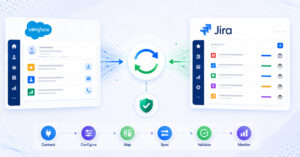
Palo Alto, CA. May 20, 2026: OpsHub Integration Manager (OIM) now supports Siemens Polarion ALM, enabling enterprises to synchronize requirements, engineering, quality, and development data across tools such as Jira, Azure DevOps, IBM DOORS NG, ServiceNow, and more. This extended support helps organizations build a connected engineering ecosystem where critical product decisions move reliably across teams without delays, disconnected workflows, or fragmented visibility.
Siemens Polarion ALM often serves as the central system for requirements management, validation, compliance, and lifecycle governance. However, execution work typically spans multiple engineering, development, and service management tools. When these systems operate in silos, organizations face delayed updates, manual coordination, inconsistent data, and broken end-to-end traceability.
OpsHub addresses this challenge by synchronizing Polarion data bidirectionally and in near ‑real‑time with downstream systems while preserving relationships, hierarchies, comments, attachments, and traceability links. This provides stakeholders with a single operational view of how requirements, engineering changes, issues, test cases and validation activities progress across programs and teams. With Siemens Polarion now part of our integration stack, organizations can connect it with 70+ ALM, DevOps, and ITSM tools to unify requirements, engineering, and delivery with end-to-end visibility and control.
“Polarion plays a critical role in engineering and compliance-driven environments, but the work surrounding it often spans many disconnected systems,” said Sandeep Jain, Founder and CEO, OpsHub. “Our goal is to help organizations create a connected digital thread where engineering, quality, and delivery teams operate with aligned, reliable information across the lifecycle.”
OpsHub makes digital transformation easier by integrating systems, upgrading legacy environments without disruption, and making it possible to see what’s happening across them. Most digital transformation efforts stall. Not because companies pick the wrong tools, but because the tools don’t work together, legacy systems are too risky to replace, and no one can see what’s happening across them. OpsHub fixes these three problems directly. It harmonizes systems, so data flows seamlessly, upgrades legacy environments without slowing down teams and brings intelligence across the toolchain so teams can act instead of guessing.
For more information on OpsHub and its solutions, visit www.opshub.com.
Media contact: Sreya Sarbadhkari, marketing@opshub.com