











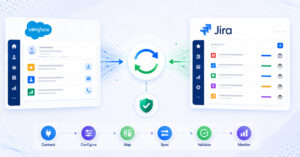
OpsHub Integration Manager

No-code integration platform for rich bi-directional sync

OpsHub Migration Manager

Zero downtime migration to tool of your choice

OpsHub Archive Manager

Keep Historical Data, Without Slowing Down Your Tools

OpsHub Migrator for Microsoft Azure DevOps

Migrate or restructure Azure DevOps Instances

OpsHub Data Bridge

Real-time, context-rich data lake for AI or analytics

Discover our story, vision, and impact.

By Domain

Software Development & Agile Engineering

No-code integration across teams & systems

IT Service Management & Customer Support

Enable collaboration between IT, support & business teams

Product Lifecycle Management & Systems Engineering

Connect PLM & engineering teams for smarter products

Requirements Management for Regulated Industries

Ensure regulatory compliance from start to release

Blogs

Explore the latest in technology and best practices

Case Studies

Success stories from the field

White Papers

Actionable insights for your business challenges.

Videos

See solutions in action

EBooks

Learn, plan, and execute with confidence

Press Releases

Official announcements and updates

Webinars

Join discussions that drive results

News Letters

Stay ahead with curated insights

OpsHub Migrator for Microsoft Azure DevOps (OM4ADO)

Zero Downtime consolidation of Azure DevOps instances

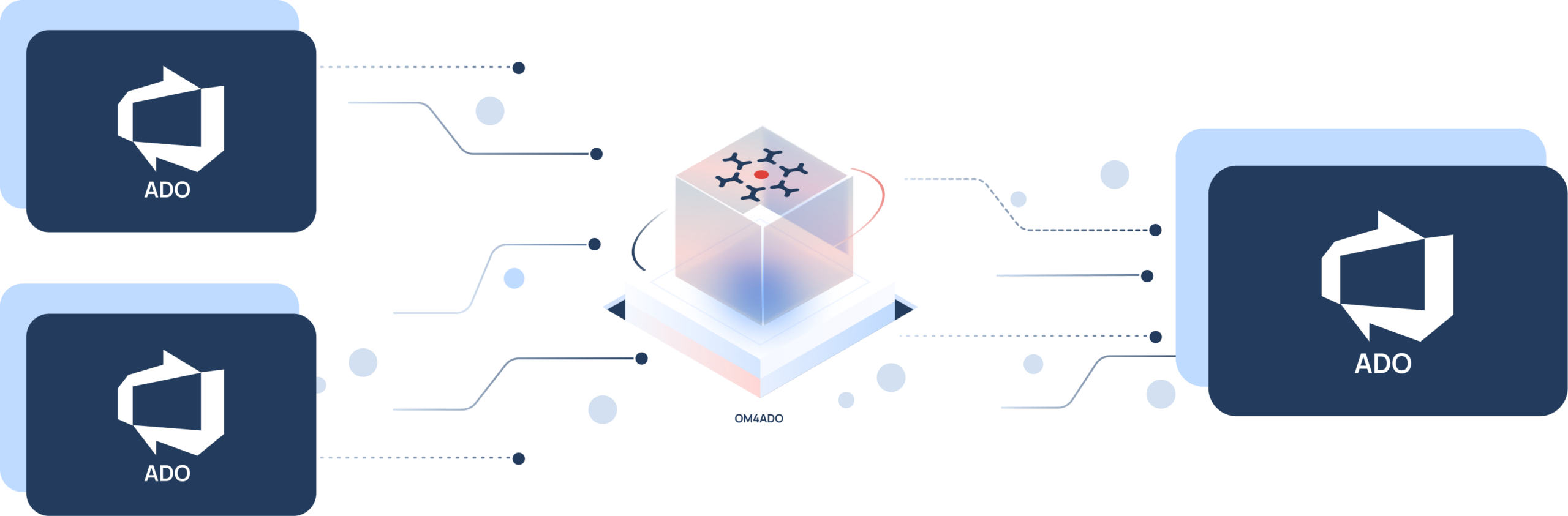
Merging Azure DevOps or TFS instances after acquisition or restructuring? OM4ADO unifies projects, work items, pipelines, and identities - with no data loss, downtime, or broken links.

Merge ADO instances

Trusted by forward-thinking teams across the globe

Why merging Azure DevOps instances is harder than expected

Each instance has its own users, templates, IDs, and permissions. Without the right tooling, merging them leads to data conflicts and broken links.

Duplicate identity conflicts

The same user may exist in multiple systems under different credentials. Without precise identity reconciliation, ownership and access can break.

Conflicting template structures

Different instances often use separate process templates, custom fields, and workflows. Reconciling these differences without corrupting data requires careful alignment.

Conflicting work item ID

Multiple instances may contain identical work item IDs. During merging, these conflicts must be handled without losing traceability.

Cross-project link integrity

Projects across instances may reference each other through links and shared artifacts. Breaking these connections disrupts reporting and traceability.

Permission and governance gaps

Each instance has its own security model. Manual merges often lead to over-provisioned access, compliance gaps, and audit risk. Without structured role reconciliation, governance becomes unstable long term.

Migration scale and volume

Merging hundreds of projects, millions of work item revisions, and large repositories spread across multiple instances increases risk. Even small structural mismatches multiply at enterprise scale. involve

The OpsHub approach to Azure DevOps consolidation

OM4ADO is designed to handle the precise, conflict-sensitive work of merging multiple instances. It does not just move data, it reconciles it. 

01

Zero downtime execution

Teams continue working in TFS while migration runs in parallel. Development does not stop during transition.

02

Template conflict resolution

Templates, fields, and workflows are reconciled before migration. Conflicts are identified and resolved through structured configuration rules.

03

Controlled identity reconciliation

Templates, fields, and workflows are reconciled before migration. Conflicts are identified and resolved through structured configuration rules.

04

Cross-project link preservation

Cross-project links, dependencies, and traceability chains remain intact during consolidation. No broken references.

05

Phased migration execution

Execute migrations in controlled waves. Move selected projects, validate, then proceed, reducing big-bang risk and aligning timelines with business priorities.

06

Built-in failure recovery

If a step fails, OM4ADO doesn’t restart from scratch. Resolve the issue and resume from the last successful point no re-migration needed.

What gets consolidated - Complete entity coverage

Experience clean, conflict-free Azure DevOps consolidation

See how OM4ADO handles your multi-instance consolidation scenario - in a free 30-minute live demo with our migration experts.

5 Steps to consolidate Azure DevOps instances

Connect environments securely

Link TFS and Azure DevOps using secure credentials.

Define migration scope

Select projects, repositories, and entities to migrate.

Map identities templates

Align users, permissions, and process configurations.

Execute migration sync

Run initial migration and enable incremental sync.

Validate cutover transition

Verify integrity and smoothly transition active teams.

Proven across enterprises

Trusted by leaders in technology, aerospace, defence, and healthcare

Plan your Azure DevOps consolidation journey

Book a free 30-minute consultation with our Azure DevOps migration experts. We'll design a risk-free instance merging roadmap.